How Building Bike Infrastructure Benefits Everyone

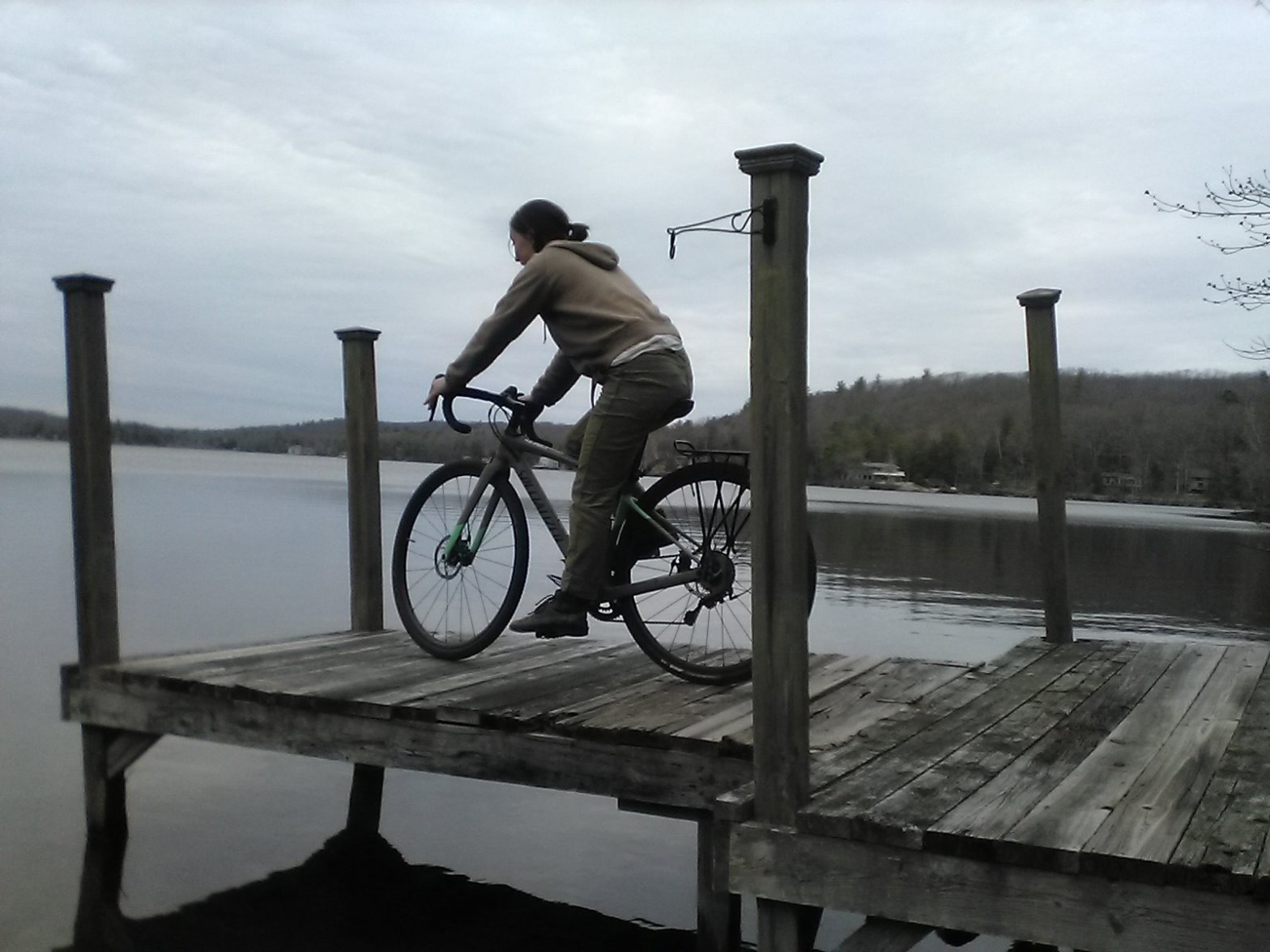
The picture was taken by my brother Morgan, of me on a dock at lake Skatutakee in Harrisville NH.

I remember first learning to bike on the little red hand-me-down two wheeler that my brothers had learned on. I remember getting my first real bike, that my mom found on the side of the road, and after that the purple one from some friends. That one lasted a while. There have been many more bikes in my life, and many, many hours spent on each one. First it was with all the neighborhood kids with our homemade jumps and games of Chicken in the parking lot. Then longer bike rides with family, or on camping trips with friends. Then commuting to school, highschool, and jobs, and then college. These memories stand out for me because the time spent on a bike is beautiful. I can’t help but smile when I’m on my bike. You see the world differently from a bike. It wakes you up while slowing you down. It makes you strong. It can take you places a car can’t go, without disturbing the quiet or wildlife. It doesn’t require fossil fuels, or pollute our air. It is free, accessible to anyone, but building support, and infrastructure for bicycles in our cities and towns, benefits more than just the serious bike fanatic. It benefits everyone in the community.

Building bike infrastructure means building more bike lanes on our roads. It means maintaining and building good bike paths with lights. It means putting in more bike racks, and making bikes available to more people, through donation programs or city paid programs. It means more businesses having showers at work, to support those who bike and making it more achievable for people who don’t. It means building these things and building support for these things to increase the number of people biking, and decrease monetary costs, environmental, and health costs. According to Drawdown.org, bicycle trips will rise to 3-8 percent of urban trips made, from the current less than 3 percent. This projected increase would displace conventional transportation trips, and avoid 2.6–6.6 gigatons of CO2 emissions. Not only do bikes themselves not burn fossil fuels, but the production of bikes is smaller scale than cars, they require less maintenance, do less damage to roads and take up less space. All things that save energy use compared to conventional transportation methods. 

The health impacts of riding a bike are clear as well. Breathing fresh air, building muscle, and strengthening your cardiovascular health, are some of the easily seen benefits. According to exerciseismedicine.org, Regular physical activity can reduce risk of diabetes, dementia, depression, high blood pressure, etc., by 40 percent. (https://www.exerciseismedicine.org/assets/page_documents/EIMFactSheet_2014.pdf) The more people are biking, the less trips to the doctor are being made, and the whole community saves money on healthcare costs. QBP, a bike company in Minneapolis, started to give incentives to employees to bike to work, and they found a 4.4% reduction in healthcare cost in just 2 years, or $200,000 in savings. (StreetsBlog.org) Just as with the decrease in CO2 emissions and healthcare costs, the increase in safety when there is strong bike infrastructure, benefits everyone on the road. Having bike lanes keeps bikes out of drivers’ way, making it safer for them, as well as bikes off the sidewalk, making it safer for pedestrians (aarp.org). 

Another benefit to an increase in bike infrastructure, is the equalizing of economic positions and stereotypes that go with them. As biking becomes more supported by the businesses and the city, people of all economic status will be biking. In addition, building bike infrastructure, specifically support from businesses, will make biking to work a good option for those who can’t afford to drive. 

All of the previously mentioned benefits are reason enough to put our money and support toward building bike infrastructure, and the short term costs of doing so make it even more achievable. When comparing the costs of building light traffic roads, and building bike lanes, the  initial costs of the latter saves $2.7 trillion, with a lifetime savings of $827 billion. (Drawdown).

We now find ourselves in a time where much has changed, people are driving less due to COVID-19, and the economy is struggling. Since people are already changing fundamental things about their lives, this may mean it is the perfect time to implement inexpensive alternatives that benefit the health and well-being of our society. 

Finally, I’d like to invite us all to push ourselves to use a bicycle to commute, when we may have previously used a car. I personally am always glad I did so. I also believe that one of the ways we can support the building of bike infrastructure is simply by riding our bikes more. The more bikes there are on the road, the more policy makers, businesses, and city officials will see biking as an attainable, sustainable alternative, that they should support.

Sources

Bicycle Infrastructure @ProjectDrawdown #ClimateSolutions. (2020, February 25). Retrieved from https://www.drawdown.org/solutions/bicycle-infrastructure

Dean, C. (2009, January 12). A Bicycle Evangelist With the Wind Now at His Back. Retrieved from https://www.nytimes.com/2009/01/13/science/earth/13profile.html?searchResultPosition=7

Walljasper, J. (n.d.). How Bicycling Infrastructure Benefits Non-Bicyclists. Retrieved from https://www.aarp.org/livable-communities/getting-around/info-2016/why-bicycling-infrastructure-is-good-for-people-who-dont-ride-bikes.html
Building a New Home

I live in a house now, that I grew up in. Ever since I was little I wanted to move, I wanted a different house, a different home. Two years ago, as a 16 year old, I saved up 4,000 dollars and bought a smaller trailer to convert into a “Tiny House”. This was a quick way to realize how hard it is to make what your dreaming of come true. I had no experience building, and was doing it all alone. But I am better at building now, than I was, and now I have a little home, that I dreamed and made a reality.

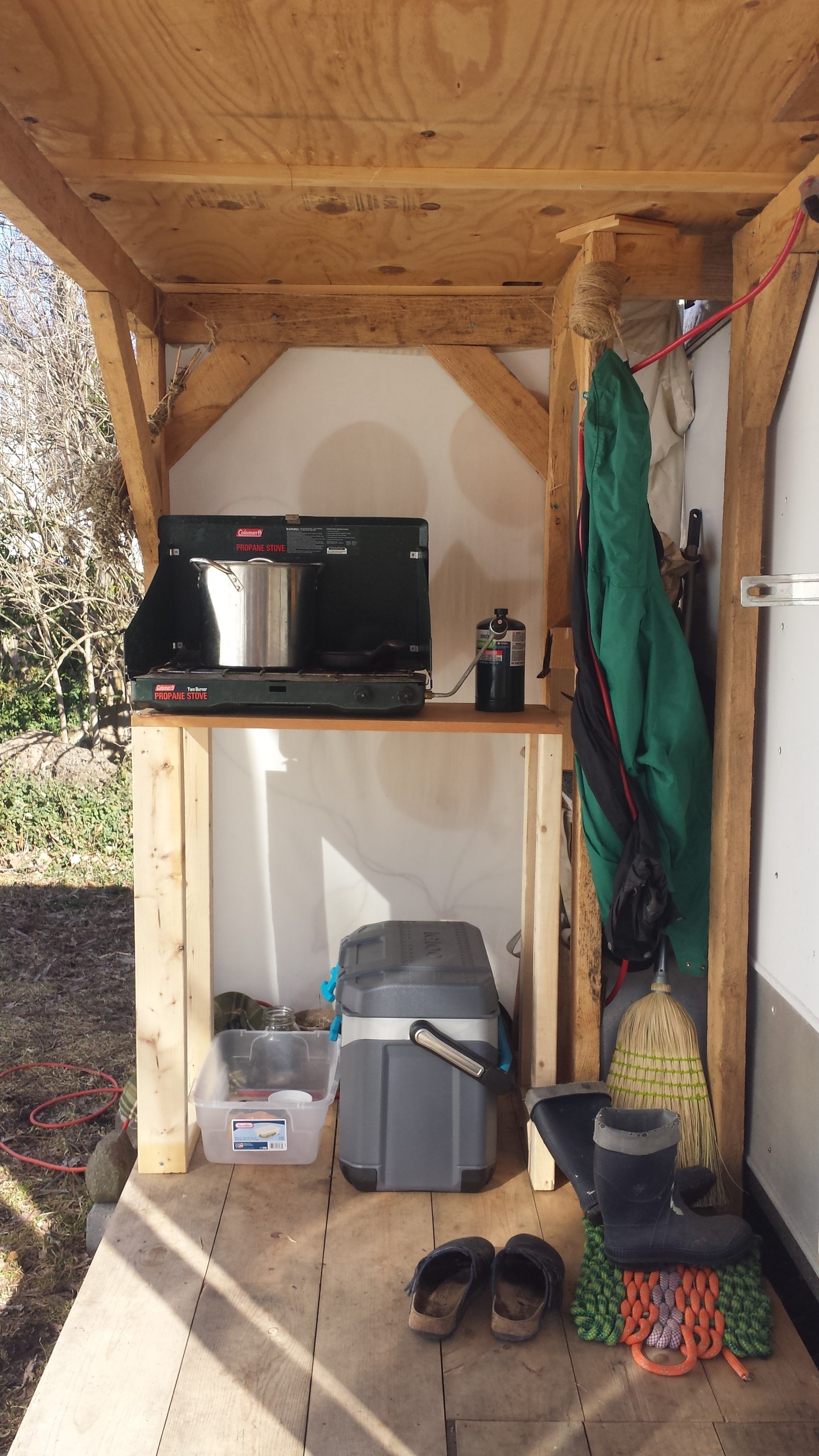
The porch outside my trailer. Taken by me.

Although I built myself a little trailer that was every I wanted, it is not set up to live in long term. The main issue being the poor insulation, and little plug in space heater that heats up the air in only the top half of the trailer, and away from the walls. And of course you can just bundle up, which is what I did for most of the winter, but I was getting sick a lot, so decided to stay in my dads house again, where there is good insulation and a wood stove. Living in my trailer made me appreciate things like big windows, and waking up with sunshine filling the room. Or sleeping in a warm room even in the winter. Mainly having electricity at my disposal, to charge my phone or laptop. But even though I appreciate and enjoy these luxury’s more now, many of them I’d still rather live without.

Last fall, even though I could easily use my dads bathroom and shower, because it wasn’t my home, I would bathe in the river. I had bathed in the river as a child, playing in the water, or on camping trips, but never as a part of my lifestyle. When I think about building a home for myself, I think of eliminating things like electricity, and running water, because I know it forces me to engage with nature to meet my needs. I also have felt the challenges of living without those luxury’s, and how incompatible that way of living is with being a full time student and working a lot, and needing electricity and time. This incapability is why I see other people struggling to live more simply as well. Shifting the lifestyle of oneself, while the community remains the same is even more challenging than doing it together.

When dreaming of building a biophilic, sustainable home, it is more than just making walls that are thick, and 4 layer glass windows, the most efficient wood stove,and solar panels on your entire roof. I think that building a home is a balance between seeing what you already have and working to obtain the dream. Maybe building a biophilic home doesn’t start in the research of sustainable products, and blueprints, but walking outside. There are amazing buildings now, that are amazingly energy efficient, and spacious and filled with light and landscape views and lots of solar electricity. Costing lots and lots to build, and allowing people to live in a “biophilic ” home, with the same comforts of a typical american home. Maybe this is the answer for some, but I want to start with less. To start in the woods, alone, and go from there.

The specifics of what the finished product looks like is less important than the process. Although it is of course important. But we are already good at that. That is how we build house now, focused on the final picture. But what about the why? Should we be examining the process of building a home, and asking why we are doing things the way we are? Thinking of how the building choices will impact the way we view life and move through the space. Maybe we need to think about how we want to live, and then what home supports that lifestyle, rather than thinking of the home first.

When I was little I thought that just moving to a different, better, closer to perfect house would make it a better home. I can see now that what what makes something a home is more than just what the walls are made of. What makes it a biophilic home for me is the process, and the motivation behind the choices made during the building and design. Choices that come from love. Life Loving.

How Practicing Gratitude is like Practicing an Instrument

To practice something is to do something regularly, often with the intent to gain proficiency. To practice something means to make a choice, to do it. And to make that choice, over and over and over again.

My dad is a musician, and for my whole life I have seen him practice almost everyday. Some days he doesn’t want to, some days it’s only five minutes, sometimes two hours, but he never stops practicing. When I got to fifth grade I started to play clarinet. Right away it felt good, and I made noticeable progress, but then I plateaued for a while. Many musicians describe this pattern of plateaus as part of playing an instrument. Over and over I have seen this pattern in other practices, not just music. The practice of gratitude may feel surprising, and profound at first, and then plateau for a while as you grow accustomed to the present state of mind.

The assignment of the gratitude journal lined up with the time I was house sitting for my mom, and had a beautiful home mostly to myself. I was already feeling overwhelmingly grateful to be there, but taking the time to respond to the writing prompts, allowed new dimensions of my gratitude to come into light. Because I was already noticing gratitude during the time of the assignment, it’s impossible to say how much of what I felt was from the gratitude journaling, however I know that while I was writing, I felt alive, and healthy. It often felt like an invitation to let go of stress or anxiety, to focus on being grateful. 

When I can let go of stress and anxiety, other things can happen, and I am capable of doing much more. Everyday I think about the present state of the world, and try to understand as much as I can, and answer the “why” questions. If that is all I did I don’t think I could live, because it’s too painful. But to think about other things changes everything. What I focus on changes the angle from which I see all the things that break my heart. In “The Book Of Joy”, (p.248) They talk about how “gratitude is motivating, not demotivating”.  This reminds me, that to make positive change, I need to focus on the positive. That it gives me the strength to act. During this time I went to the first demonstration I had been to in almost a year. I no longer had a reason not to. Particularly my own emotional reasons.

Later on in the reading it speaks about the power we have over our emotions, as well as the impermanence of all life. This also reminds me not to be too grave about things. To hold the stories of the past, the passing of life, in addition to the little surprises of each moment, that can be invitations for great joy. To me, practicing gratitude is all those things. Practicing anything doesn’t stand alone, but in the nest of one’s whole experience, but to practice music for me, brings many of these same experiences. The release of stress and anxiety, the presence, and the joy that comes from the surprise of the sounds.

The positive effects are clear, from my own personal experience and others. The challenge of continuing a practice, through the plateaus so to speak, can bring us to new, unexpected places. Just like learning my clarinet. Even when progress can’t be seen or marked, continuing to practice is what holds us where we are. With gratitude, it helps us stay awake, see the old anew.

Our Connection to Nature

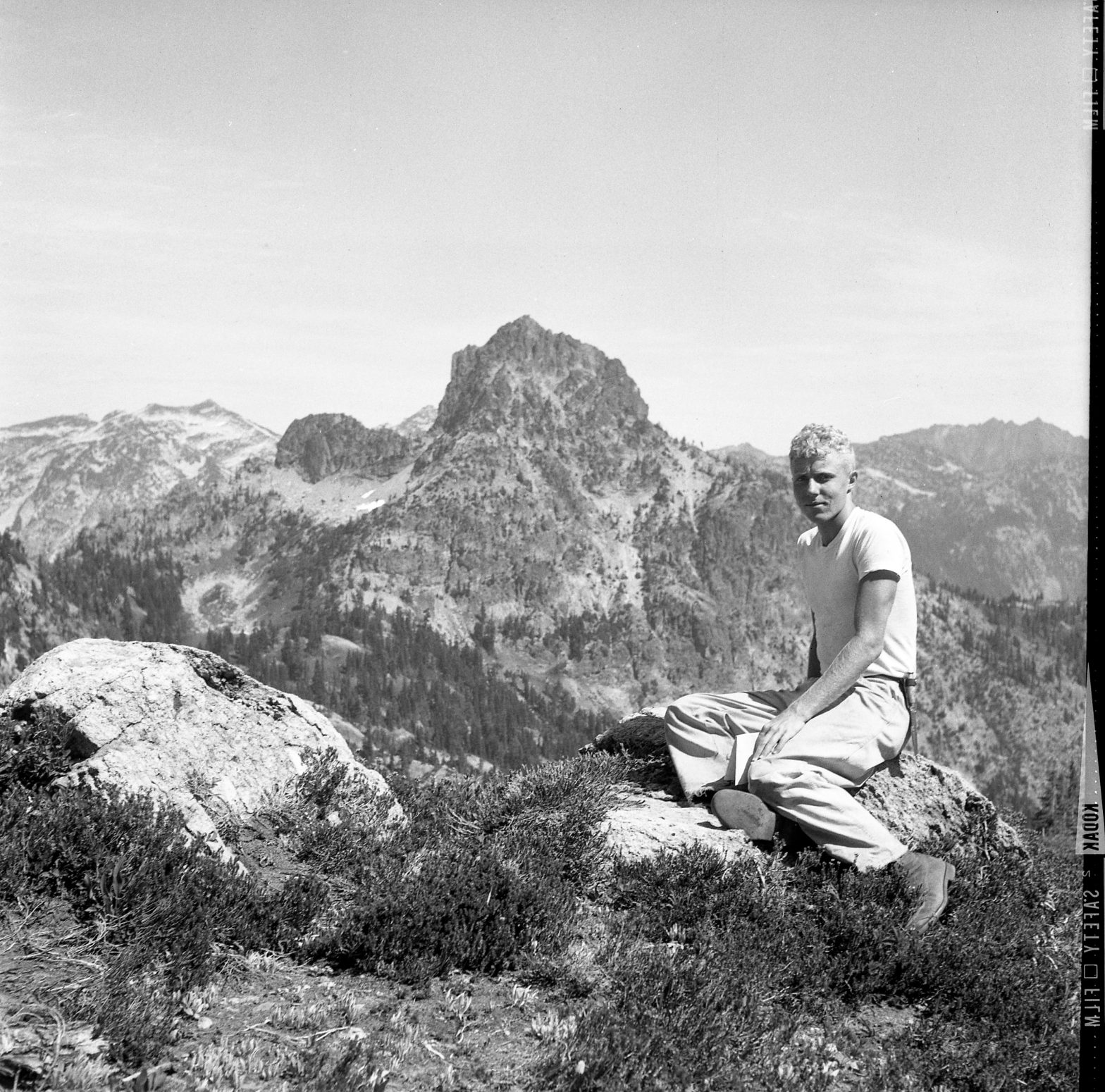
A picture of my grandfather in the mountains in California. He took me on my first real backpacking trip when he was 75, and I was 10.

  2/4/20

When I think about connection to nature, my instinct is to stop thinking about it and go outside. All the real living I’ve done, has been outside. I’ve been lucky enough to have spent many days in the wilderness, where I didn’t think about my connection to nature until I returned to my modern house, with electricity and running water and thick walls and furniture. To engage with nature from a more intellectual, classroom setting, feels counterintuitive, but I believe there is much to be learned. The reading has made me reflect on my own experience, as well as gain insight from others.

                                                                                                                                                                                                                                                                                                                                                                                                                                                                             In “Mind in the Forest” by Scott Russell Sanders, he describes falling into the habit of following his breath, but then soon after, following the babbling of the nearby creek, and watching the bright leaves. This resonates with my experience of moments of stillness in the natural world, away from other people. How the breath of the natural world becomes more powerful the the rhythm of my own breathing, and I sink into the world around me, as a piece of the whole.

Sanders also speaks about the human capacity of sympathy, curiosity, and love, toward other, non-human species, and the earth. I have lived both deeply connected to the earth, and deeply disconnected. In the times of connection, I could see how our human experience is similar, and reflected in all of life. I felt how my ego and identity were only a part of my reality. I could feel how my ego wasn’t just feeling connected, but that all of life is connected to each other. I could see that things I feel, as a universal experience of a shared earth. I was reminded that all of our basic human needs, shelter, and food, and water, come directly from the earth. Today, many of us live in a world where our food, and water, and shelter, are far removed from the earth by the time they reach us.

In the piece by Sanders, he recounts an experience he had with one particular douglas fir. He talks about feeling a sense of calm seeping in. A feeling all of us readily welcome. I can’t say in words why I think us humans find that feeling among trees, but I feel that it is true. Maybe their steadiness, their unwavering strength. Or perhaps that they do waver, and persevere. Sanders shares that he didn’t check a clock or hurry, during his time with the douglas fir. He says that he stays with the tree until it lets him go. This shifts the focus away from the human ego and more toward the tree. A thing I seek to do when I am among the trees.                                             

Sanders also speaks about analogies from nature. Using human terms to try to describe nature. I have often been critical at the quickness with which people seem to assume that other things in nature have some likeness to humans, and human understanding. I like to think we can learn from nature without thinking we need to understand and describe it all. Human analogies can be drawn from nature without assuming that we are capturing its essence in our limited human understanding. The ability to look at the natural world, and draw out what we can, with the intent to learn, is one that I cherish. 

When we are not actively engaging our thoughts with the natural world, just being with it, with no walls in between, benefits our whole beings. In a piece written by Oliver Sacks, called “The Healing Power of Gardens”, he points to studies that show how just looking at trees has a positive effect on us physically, as well as psychologically. I was lucky enough to go to a small private school, where I spent a lot of time outside. When I got to highschool, I would always ask to take my tests outside, at the picnic table. I could feel how much clearer my thinking was when I was alone. Outside. I would do my homework outside during our lunch break, even in the winter, because it was easier to think. The walls that separate us from the natural world, and the food, and money, and material goods, are deeply ingrained in our culture. And we are consumers, consuming it all.

From the moment we are born, many of us are distracted every time we cry, or express intense emotion. Babies are experiencing the whole world for the first time, and all the emotions that come with it, but with a limited ability to comprehend it all. Imagine how hard that must be? But parents so often distract a baby’s crying, the kind of crying that is just for crying, with food, or a pacifier, or TV.  It seems so clear that this habit of distracting starts when we are babies, and doesn’t necessarily stop as we get older. This distraction disconnects us from our deep, authentic feelings. It connects us with a world of quick fixes, and band aids. This disconnection isn’t just to ourselves, but also to the world around us. To the parts of ourselves that are one with the earth. One with the earth because we are connected to all beings.

Design a site like this with WordPress.com
Get started